New Local Accommodation Regulation Approved in Lisbon (2025)
Summary
On 2 December 2025, the Lisbon Municipal Assembly approved the revised Local Accommodation Regulation (RMAL), following the proposal previously adopted by the City Council. The reform aims to balance tourism activity with housing needs, in a context where Local Accommodation (AL) represents a significant share of the city’s tourist capacity. The new regulation replaces the 2019 framework and follows a period of public consultation held earlier in the year.
Key Structural Changes
1. New territorial control units
Monitoring and containment measures will now apply at two levels:
▪ Parishes (freguesias)
▪ Neighbourhoods (bairros)
This allows the municipality to declare containment areas more precisely and dynamically.
2. Stricter ratios for declaring containment
The thresholds that determine whether an area is in “absolute” or “relative” containment have been significantly tightened:
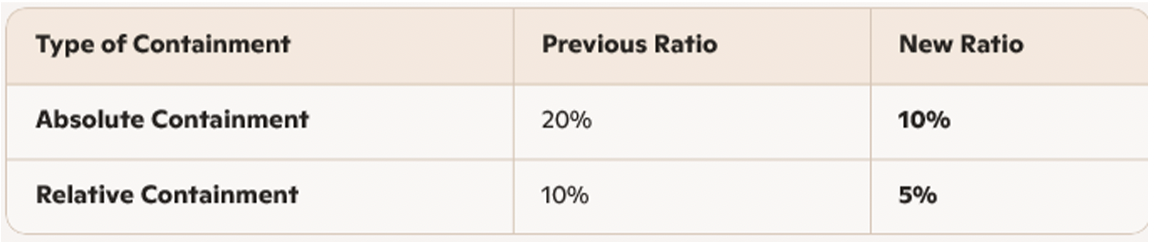
This means that:
▪ Absolute containment applies when AL units ≥ 10% of residential dwellings.
▪ Relative containment applies when AL units ≥ 5% and < 10%.
3. Immediate impact on the city
Under the new ratios:
▪ Six parishes are now in absolute containment: Arroios, Santo António, São Vicente, Santa Maria Maior, Misericórdia, Estrela.
▪ Nine neighbourhoods also fall under absolute containment.
▪ Several additional areas enter relative containment, including Avenidas Novas and thirteen other neighbourhoods.
4. Citywide automatic containment mechanism
If Lisbon as a whole reaches a 10% AL-to-housing ratio, a single citywide absolute containment zone will be automatically created.
Additional Measures Introduced
1. Exceptional opening for “room” modality
In relative containment areas, the regulation exceptionally allows:
▪ AL in the form of private rooms
▪ Only in owner-occupied primary residences
▪ Only in T2 or larger dwellings This aims to support resident income without expanding full-unit AL pressure.
2. Restrictions on exceptional authorisations
The regulation prohibits:
▪ AL authorisations for properties acquired through public auctions
▪ Certain complementary commercial uses in AL units
3. Alignment with the Municipal Housing Charter
The new RMAL reinforces the municipality’s strategy to:
▪ Contain AL in saturated areas
▪ Protect residential housing stock
▪ Promote a balanced coexistence between tourism and local communitiesrelated to public order, health, or security.
4. Practical Implications for Owners and Investors
▪ New AL registrations will be prohibited in all areas under absolute containment.
▪ In relative containment areas, new registrations will be highly restricted and subject to the new ratios.
▪ Existing AL licences remain valid, but:
▪ Expansion, transfer, or modification may face new limitations.
▪ Investors should expect increased regulatory scrutiny and reduced availability of new licences.
▪ The city may enter full containment if the municipal ratio reaches 10%.
Voting, promulgation and publication
The regulation has been approved by the Municipal Assembly and will enter into force following publication.
The municipality will publish updated maps identifying containment areas. Owners and operators should review their compliance obligations and assess the impact on ongoing or planned AL activities.
The newly approved RMAL represents a significant tightening of Local Accommodation rules in Lisbon. The stricter ratios, expanded containment areas, and new citywide mechanism indicate a clear municipal strategy to limit AL growth and prioritise residential housing availability.
Reis Pinto Law will keep monitoring closely this matter and providing timely follow up to all their clients.